
Website for IT consultants
Nobody hires an IT consultant because you know the most acronyms. They want to understand the problem you solve, what you have built and how quickly they can speak to you.
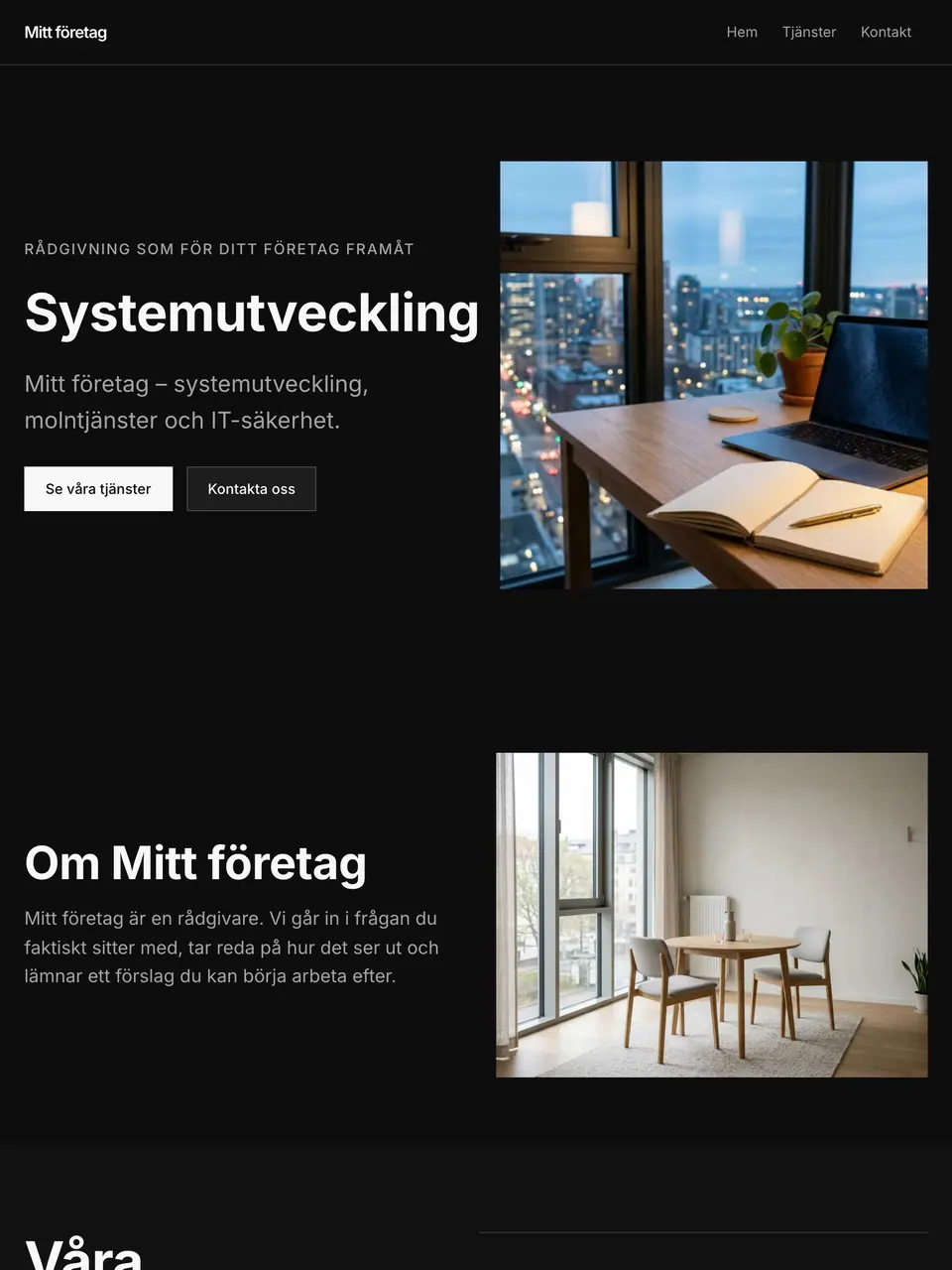
With Snabbsite you gather services, cases and contact on a website that feels sharp without buzzword bingo. Add articles when you want to show how you think.
Describe the problem you solve, not the technology you know
A list of frameworks and certifications is read by other developers, not by the person who'd hire you. Write three or four sentences instead about the kind of problem you tend to be called in for: systems that don't talk to each other, an old solution nobody maintains any more, a company that has outgrown its spreadsheets. The client recognises her problem long before she recognises a technology choice.
Say whether you join a team or take whole projects
They're two completely different businesses. Joining a team part-time for six months is bought by a manager with a budget and a resourcing gap; taking a whole project from requirements to production is bought by someone who wants to stop thinking about it. Write out which you do, whether you work by the hour, the week or a fixed price, whether you're on site, remote or both, and how many hours a week you have free.
Cases sell, but only with the problem and the result in them
A case study that lists the tools used proves nothing. Write it short instead: what the client's problem was, what you did, how long it took and what got better afterwards. If you can't name the client, write the sector and the size instead. Never invent numbers - a made-up result is the one reference that falls apart exactly when someone asks about the detail.
What actually worries the client is what happens afterwards
The most common hesitation about hiring a lone IT consultant isn't whether you can build it, but what happens when you move on: who maintains it, where does the code live, can someone else take over, does the client own what was built. Answer that plainly on the page, along with whether you offer support after delivery and in what form. It takes one paragraph and decides the deal surprisingly often.
Why you need a website
- Services explained in plain language
- Cases that show outcomes, not just tech stacks
- An easy contact route for new projects
- Room for insights and articles when you want to build trust
What's included
A sharp IT consultancy website that shows expertise and books calls.
- Ready-made website
- Colours & typography
- Services & pricing
- Frequently asked questions
- Contact form
- AI that knows your business
- Book a call
- Cases/references
Frequently asked questions
Yes. Describe the problem, approach and outcome at the level your confidentiality agreements allow.
Cannot find your question? All questions and answers
Ready to get started?
Describe your business and we build your website in minutes. Everything stays editable afterwards.